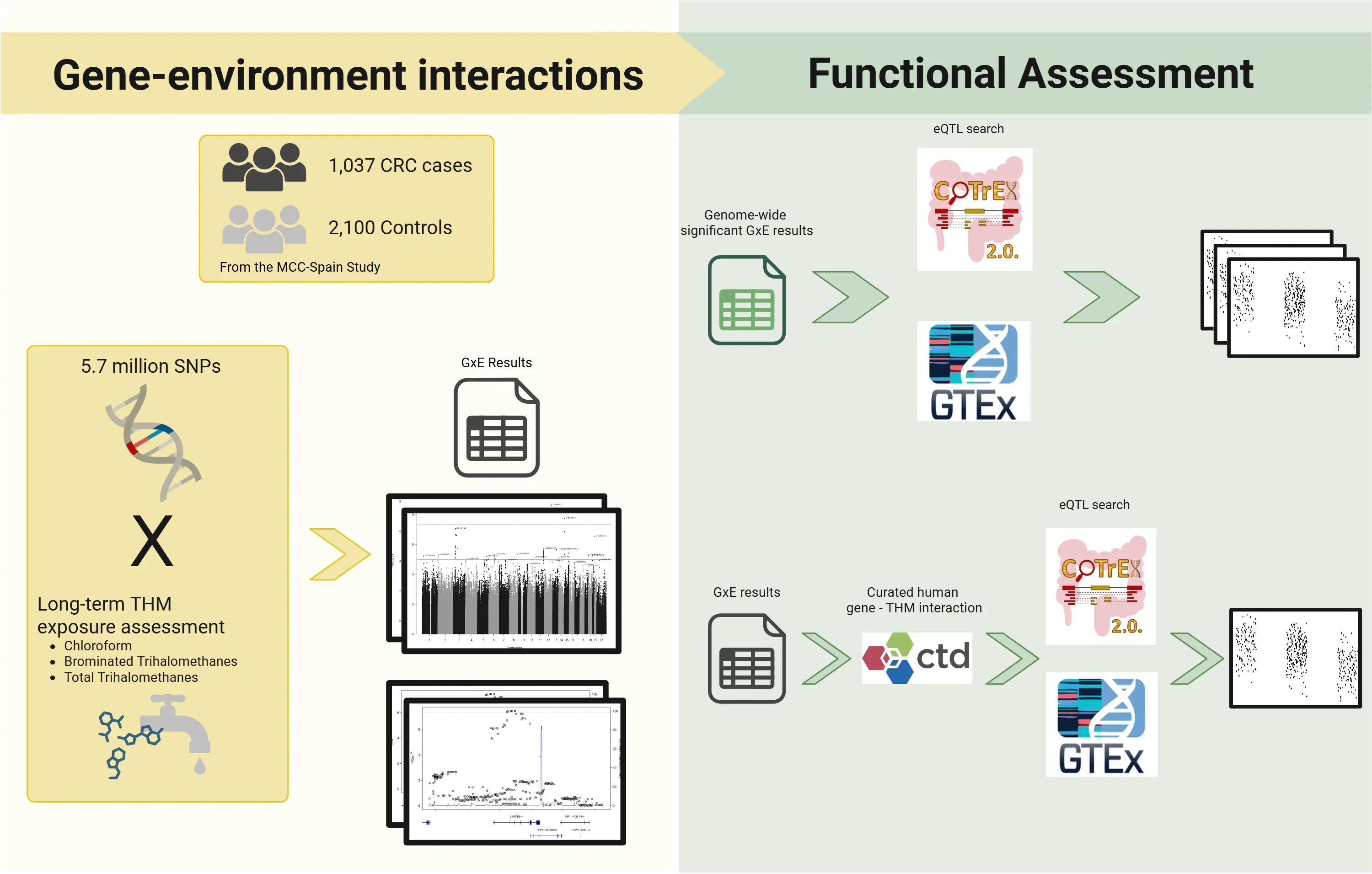
A new study led by researchers from ODAP Biomarkers and Susceptibility Unit, and published in Environmental International, has shed light on the specific interaction between genetics and the environment in the risk of developing colorectal cancer.
The development of colorectal cancer does not depend on a single factor but is the result of a complex interaction between genetics, the environment and individual lifestyle. The research, led by Ferran Moratalla as lead author, has focused on the effect of prolonged exposure to trihalomethanes —a common by-product of the water purification process—on the risk of developing colorectal cancer. According to the results, genetic variants have been identified that could modulate the body’s response to trihalomethanes and influence the risk of developing this cancer. Specifically, a variant related to the LRRC8B gene could play a significant role in the biological response to trihalomethanes, increasing susceptibility to colorectal cancer and modulating the risk of developing tumours.
Further research is needed to confirm these findings and to explore the biological mechanisms underlying the link between trihalomethanes exposure, genetics and the risk of developing colorectal cancer.